
Nutrition
How to Build a Balanced Plate Without Overthinking It
A simple, flexible way to put meals together when nutrition advice feels overwhelming.
The short answer
Build meals around plants, protein, slow carbohydrates and healthy fats. Repeatable structure beats perfect eating.
Key takeaways
- Protein, fiber and healthy fat at each meal help steady energy and fullness.
- Colour on the plate is an easy proxy for nutrient variety.
- Consistency across the week matters more than any single meal.
Why balanced meals matter more than perfect ones
Most people do not struggle with nutrition because they lack information. They struggle because there is too much of it, and most of it contradicts something else they read last week. A balanced plate gives you a starting point you can repeat, travel with, and adjust — without tracking a single number.
Key takeaways
- Protein, fiber and healthy fat at each meal help steady energy and fullness.
- Colour on the plate is an easy proxy for nutrient variety.
- Consistency across the week matters far more than any single meal.
What goes on a balanced plate?
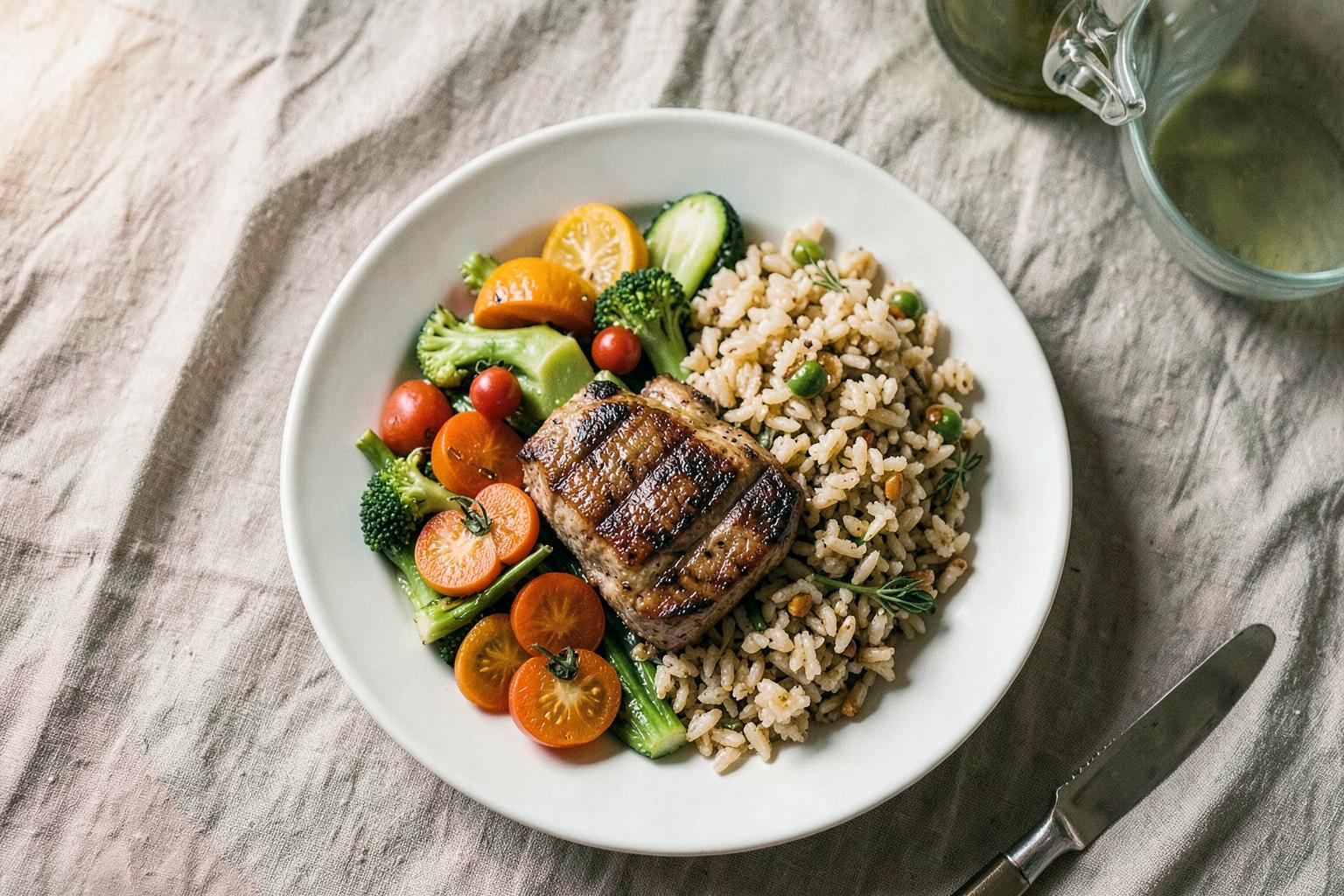
A simple starting structure: about half the plate plants, a quarter protein, a quarter slow-digesting carbohydrate, plus a source of healthy fat. That is the whole framework. Everything else is preference.
Half the plate: vegetables and fruit
Vegetables bring fiber, water, and a wide range of vitamins and minerals. Fresh, frozen, roasted or raw all count. If cooking feels like a barrier, frozen vegetables are a genuinely good option.
A quarter: protein
Protein supports muscle, satiety, and steadier energy between meals. Eggs, fish, poultry, beans, lentils, tofu, and Greek yogurt are all reasonable choices depending on how you eat.
A quarter: slow carbohydrates
Whole grains, potatoes with skin, oats, quinoa, and legumes digest more slowly than refined options and tend to leave people feeling steadier a few hours later.
Plus healthy fats
Olive oil, avocado, nuts and seeds help with flavour, fullness, and absorption of certain vitamins. A small amount goes a long way.
Five ways to make it easier this week
- Pick three breakfasts you like and rotate them instead of deciding each morning.
- Cook protein once, use it twice. Leftovers are a strategy, not a compromise.
- Add before you subtract. Adding a vegetable is easier than removing a favourite food.
- Keep a shortcut shelf — tinned beans, frozen vegetables, pre-washed greens.
- Eat sitting down when you can. Pace affects how a meal feels afterwards.
What if a meal is not balanced?
Then it is one meal. The goal is a pattern you can hold for months, not a scorecard. Most people find that when the majority of their meals are structured this way, the rest sorts itself out without much effort.
When to seek personal guidance
If you are managing a health condition, taking medication, pregnant, or noticing symptoms that persist, work with a licensed healthcare provider before making significant dietary changes.
Frequently asked questions
- Do I need to weigh or measure my food?
- No. The plate framework is designed to work visually so you can use it anywhere, including restaurants and other people's homes.
- Is this medical or dietary advice?
- No. This is general wellness education. Speak with a licensed healthcare provider before making significant dietary changes, especially if you manage a health condition.
This article is educational wellness content. It is not medical advice and is not intended to diagnose, treat, or cure any condition. Always talk with a licensed healthcare provider about your personal health.
Make Wellness More Personal
Get practical wellness insights designed around you
Reading is a great start. A complimentary Wellness Scan helps you understand what your own patterns may be pointing to — and what a realistic next step could look like.
Take Your Complimentary Wellness ScanSubmit your details and Steph will personally reach out to schedule your scan and review.
Keep reading
More on Nutrition
How to Support Healthy Digestion Every Day
Simple, everyday habits that can support digestive comfort — plus how to notice the patterns your body is already showing you.

Healthy Aging Basics: Feeling Your Best at Every Stage of Life
The foundations of aging well are simpler — and more hopeful — than the marketing suggests.

What a Wellness Scan Can (and Cannot) Tell You About Your Health
An honest look at what wellness scanning offers — and where its limits are.